Corridor traffic can create disputed facts
Lane changes, turns, buses, pedestrians, commercial entrances, traffic queues, and signal timing can affect the driving analysis.
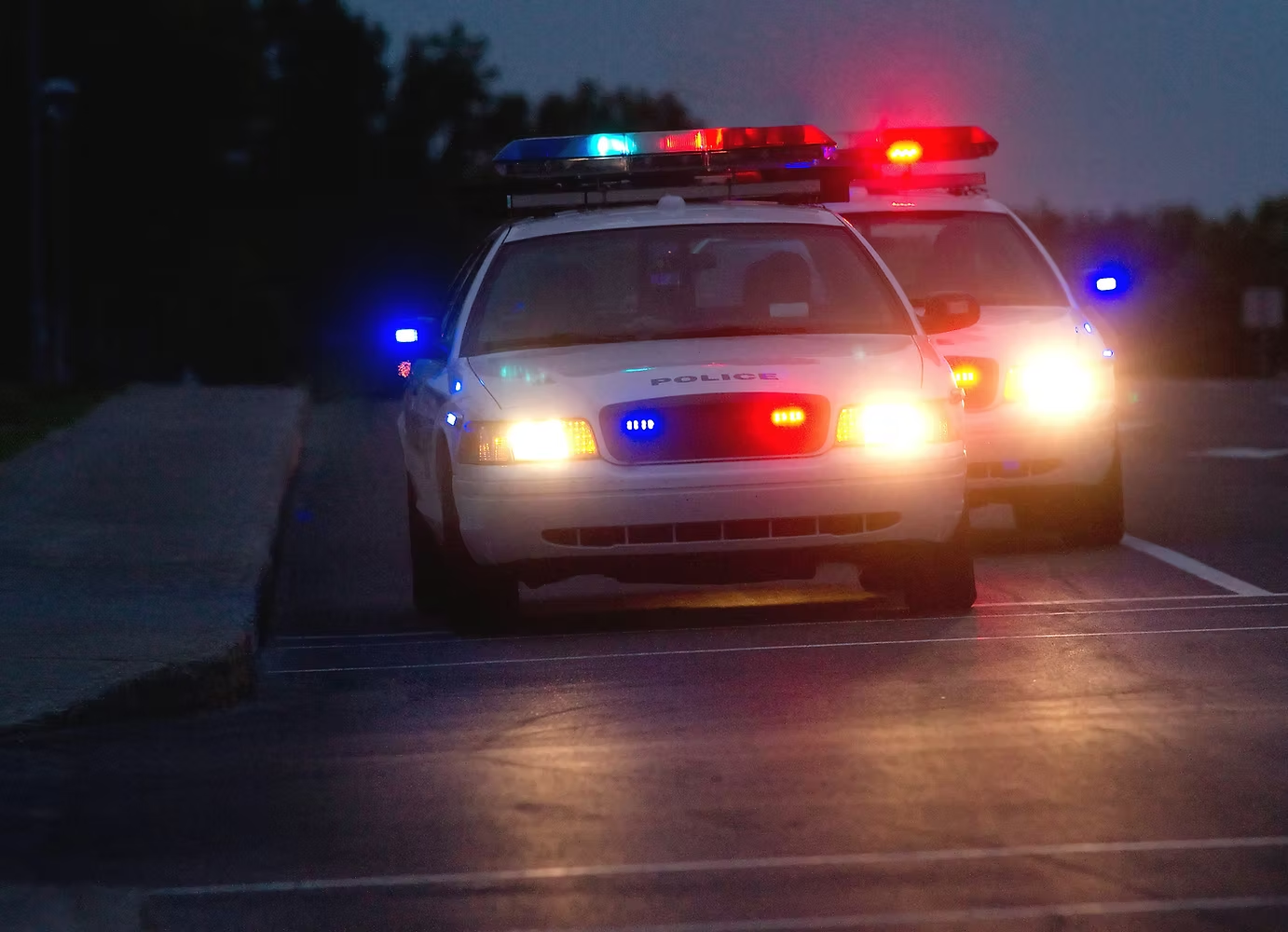
Dangerous Driving in Queen Street Corridor
Sawan Law House LLP helps Queen Street Corridor clients charged with dangerous driving review corridor traffic, collision evidence, witness statements, video, licence consequences, and defence options.
Request a call back
A Queen Street Corridor dangerous driving charge can involve heavy traffic, commercial entrances, pedestrians, transit movement, or a collision where video and timing are important.
Sawan Law House LLP helps Queen Street Corridor clients preserve evidence, review the Crown theory, and plan for licence, insurance, employment, immigration, and travel consequences.
We look at the full corridor context before deciding how the allegation should be answered.
This page provides general information only and is not legal advice. Criminal driving matters can be urgent and consequence-heavy. Do not miss court, drive while suspended, speak to police, ignore licence paperwork, or make decisions about your case without legal advice.
Helpful Next Steps
Local Planning Notes
Lane changes, turns, buses, pedestrians, commercial entrances, traffic queues, and signal timing can affect the driving analysis.
Dashcam footage, business video, plaza cameras, photos, vehicle data, and witness names should be preserved as soon as possible.
Employment driving, family transportation, immigration, travel, professional duties, and record concerns should be reviewed early.
Queen Street Corridor Focus
Clients may face dangerous driving allegations after a collision, intersection incident, road complaint, pedestrian concern, or police observation.
We review police notes, witness statements, video, photos, collision reports, road conditions, vehicle data, and disclosure gaps.
We help clients assess the alleged driving, whether the criminal threshold is met, licence consequences, insurance, employment driving, immigration, and travel.
How We Help
We examine speed, lane use, turns, following distance, traffic density, transit movement, and road conditions.
We assess traffic controls, road layout, visibility, weather, vehicle condition, photos, videos, and collision materials.
We test officer notes, civilian statements, 911 information, dashcam footage, reconstruction material, and inconsistencies.
We consider suspension risk, insurance, employment driving, family transportation, immigration, travel, and record concerns.
Our Process
We start with the court date, release terms, charge documents, licence status, and collision or insurance materials.
We help identify videos, photos, route details, vehicle data, repair records, witness names, and traffic timing information.
We review police observations, witness reliability, collision evidence, video, road context, and missing materials.
We discuss defence options, resolution discussions, trial issues, expert needs, licence consequences, and court obligations.
What To Prepare
You do not need everything ready before contacting us, but these items help us understand your situation faster.
Common Questions
Yes. Traffic volume, buses, lane changes, commercial entrances, and signal timing may affect what a witness could see.
If video may exist, act quickly. Many systems overwrite footage, so preservation should be discussed early.
It can, especially if you drive for work or need a clean record for your role.
Request a consultation